
Balancing Self-Care and Activism

By Gia Han Nguyen
Over the recent years, we have finally acknowledged activism work and resistance of people fighting for human equality and justice. Whether that includes protesting, doing community work, supporting organizations like &Rise, or educating people, all of these activism actions are needed to help others. Despite this, we do not give ourselves time and grace to rest our minds and bodies. Self-care, despite not looking like it, is an important form of activism everyone needs to do.
What is self-care, and why is it important?
According to the World Health Organization, self-care is “the ability of individuals, families and communities to promote health, prevent disease, maintain health, and cope with illness and disability with…support of a health worker.” Self-care can be enacted by oneself or as a family or community. Because of how complex self-care can be, it can look different for every person and culture. July 24th is considered International Self-Care Day to promote the importance of self-care and recognize that self-care is a form of healthcare.
The Global Self-Care Federation has six methods of self-care, including:
Making healthy lifestyle choices
Avoiding unhealthy lifestyle habits
Using prescription and non-prescription medicines responsibly
Self-recognition of symptoms
Self-monitoring
Self-management
Not only is self-care healthcare, but it also an unacknowledged form of activism. Self-care has been popularized within Black communities since the 1960s, starting with the Black Panther Party using self-care to sustain themselves mentally and physically while they fought for the rights of Black people and taking care of their communities. Audre Lorde, a Black writer and professor, coined the term “self-care” and compared it as political warfare in her 1988 book A Burst of Light. Highlighted with Tricia Hersey and her organization, The Nap Ministry, she views napping as a form of self-care and resistance against the status quo that forces people to constantly work and instead “embrace rest as a healing spiritual practice.”
Knowing the history behind self-care and its importance in historical activism work can help us better understand why self-care is needed in current activism work. When we do not give time for ourselves to rest after doing important yet taxing work, our bodies and minds won’t be able to keep up with what we do daily. In societies where people constantly work and have no time to rest, self-care becomes a form of resistance against corporations to view workers as humans instead of machines. Self-care is especially important for people from marginalized communities and people that fight for marginalized communities that both work and help their communities.
What might self-care look like?
Self-care varies so much from person-to-person and culture-to-culture, and people also utilize self-care methods from different cultures. For example, yoga is a form of self-care originating from ancient India that focuses on the body and mind being present, which allows people to relax and exercise. Stephanie Y. Evans’s book Black Women’s Yoga History: Memoirs of Inner Peace highlights that yoga is present in African cultures like Ethiopia by practicing “bowing down to greet the…sun” and Black figures like Rosa Parks and Maya Angelou conducted yoga classes. They did yoga to replenish the body and mind and get back to their activism work the next day. Below are some examples of how self-care looks like globally and what you can implement in your daily life:
Indigenous cultures:
Strengthening connections to the land: managing land, gathering food
Learning Indigenous languages
Traditional dancing at gatherings: Tarvarnauramken, Sun dance, Ghost dance
African cultures:
Body exfoliation: hammam rituals, body scrubs, shea butter massage
Traditional music: drumming (Igbo udu drum, Malian djembe drum), gatherings, dancing
Cooking traditional and nourishing food with African ingredients (okra, baobab, moringa)
Asian cultures:
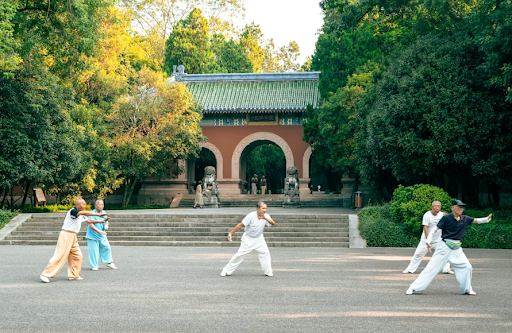
Wellness practices: yoga, meditation, tai chi
Body maintenance: massages (Thai, Shiatsu), feet soaking, moxibustion
Eating healing food: herbal teas, ginger in soups, goji berries
South American cultures:
Eating yerba mates
Spiritual baths and curanderos
Smudging ceremonies (Note: smudging ceremonies is important to mention as a form of self-care within Indigenous and First Nations communities, but smudging ceremonies have been appropriated and certain herbs used have been over-harvested. I discourage buying smudge sticks and smudging kits as this lowers the amount of traditional herbs available for Indigenous communities to use in their practices. Other herbs like lavender, rosemary, and mint can be used.)
Western cultures:
Wellness practices: exercise, sleep/napping, reading
Forming connections: volunteering, reaching out to family/friends, go to meetups
Spending time with oneself
The impact of self-care
Because self-care can look so different for everyone, finding what self-care is suited for you might seem difficult because of outside responsibilities like working, feeding your family, or continuing activism work. However, self-care habits can start as a task being done within five minutes that relaxes your mind or body. By knowing what self-care methods fit into your schedule and are achievable, your mind and body can be re-energized to continue doing hard work. Self-care helps manage stress, lower the risk of illness, and increase more energy. Not only do you heal your body and mind from life stressors, but you also have enough energy to continue activism work, making self-care a form of resistance against the status quo that tries to break you.
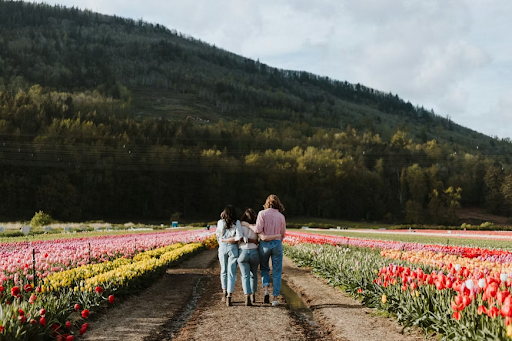
Self-care also benefits everyone. When enacting self-care from person-to-person, everyone will have enough energy to continue activism work. In an interview with Stephanie Y. Evans, she mentions that self-care, despite being effective on an individual level, is not a cure for systemic violence. Systemic violence needs collective effort to address the systems in place and what can be done to heal, which leads self-care to community care as a method of collective action and resilience.
Take your Self-Care to the Next Level with &Rise
Self-care may not be a radical act of resistance for everyone, but it is critical to help prevent burnout when doing important activism work. Consider subscribing to our newsletter for weekly empowerment and news about upcoming events to do your self-care at. Not sure where to start your self-care? Get individual or group support for your mental health! Provide support by volunteering or donating! Whatever form of self-care you decide to do, we support you in your self-care journey.
